


The Fall Out of Time

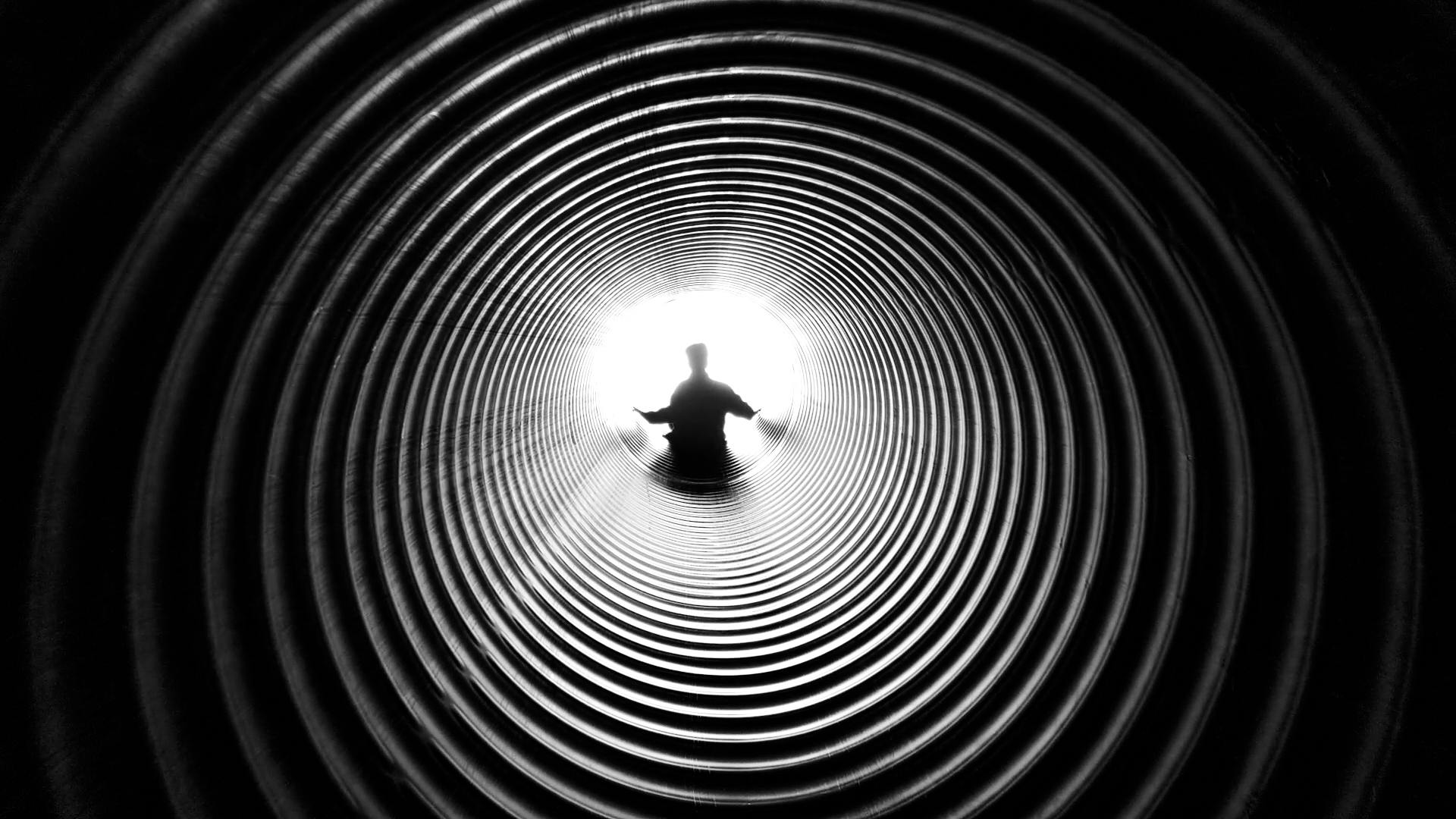
From The Fall into Time - Emil Cioran
Clutch at the moments as I may, they elude my grasp: each is my enemy, rejects me, signifying a refusal to become involved. Unapproachable all, they proclaim, one after the next, my isolation and my defeat.
We can act only if we feel they convey and protect us. When they abandon us, we lack the resources indispensable to the production of an act, whether crucial or quotidian. Defenseless, with no hold on things, we then face a peculiar misfortune: that of not being entitled to time.
I accumulate the past, constantly making out of it and casting into it the present, without giving it a chance to exhaust its own duration. To live is to suffer the sorcery of the possible; but when I see in the possible itself the past that is to come, then everything turns into potential bygones, and there is no longer any present, any future. What I discern in each moment is its exhaustion, its death-rattle, and not the transition to the next moment. I generate dead time, wallowing in the asphyxia of becoming.
Other people fall into time; I have fallen out of it. The eternity that set itself above time gives way to that other eternity which lies beneath, a sterile zone where I can desire only one thing: to reinstate time, to get back into it at any price, to appropriate a piece of it, to give myself the illusion of a place of my own. But time is sealed off, time is out of reach; and it is the impossibility of penetrating it which constitutes this negative eternity, this wrong eternity.
Time has withdrawn from my blood; they used to sustain each other, they flowed together; now that they are each paralyzed, is it surprising that nothing becomes? Only they, if they started up again, could restore me to the living and relieve me of this sub-eternity I stagnate in. But they won't — or can't. A spell must have been cast on them: they no longer move, they're frozen stiff. No moment can creep into my veins. A polar blood — for centuries!
Everything that breathes, everything that has the color of being, vanishes into the immemorial. Did I really once taste the sap of things? What was its flavor? It is inaccessible to me now — and insipid. Satiety by default.
If I don't feel time, if I am incomparably remote from it, at least I know it, I constantly observe it: time occupies the center of my consciousness. Can I believe that even its Author ever weighed and pondered it as much? God, if it is true that God created time, could not know it in depth, since He is not in the habit of making it the object of His ruminations. But if I'm sure of anything, it's that I was evicted from time only to turn it into the substance of my obsessions. In fact I identify myself with the nostalgia it inspires in me.
Granted I once did live in time, what was it, how did I represent its nature? The period when it was familiar is alien to me, has deserted my memory, no longer belongs to my life. I suspect it would be easier to gain a foothold in the true eternity than to re-establish myself in time. Pity the man who was once in Time and can never be there again!
(Nameless downfall: how could I have grown infatuated with time when I have always conceived my salvation outside it, just as I have always lived with the certainty that time was about to exhaust its last reserves and that, corroded from within, corrupt in its essence, time lacked duration?)
Sitting on the brink of time, watching the moments go by, we end up no longer able to see anything but a succession without content, time that has lost its substance, abstract time, version of our Void. From abstraction to abstraction, time shrinks because of us, dissolving into temporality, the shadow of itself. Now it is up to us to revive it, to adopt toward time a clear-cut attitude, without ambiguity. Yet how can we, when time inspires such irreconcilable feelings, a paroxysm of repulsion and fascination?
Time's equivocal ways turn up in everyone who makes it his chief concern and who, ignoring its positive content, concentrates on its dubious side, on the confusion it produces between being and nonbeing, on its impudence and its versatility, on its louche appearances, its double-dealing, its fundamental insincerity. A deceiver on a metaphysical level. The more we examine time, the more we identify it with a character we suspect and would like to unmask. And whose power and fascination we finally surrender to. From here to idolatry and bondage is only a step.
I've desired time too much not to falsify its nature, I've isolated it from the world, made it into a reality independent of any other, a solitary universe, a surrogate absolute: strange process which severs it from all it implies and involves, metamorphosis of the supernumerary into the protagonist, unwarranted and inevitable promotion. That time has succeeded in benighting me I should be the last to deny. Yet the fact remains that it has not foreseen that I should one day shift, in its regard, from obsession to lucidity, with all this implies of a threat to time.
Time is so constituted that it does not resist the mind's insistence on fathoming it. Its density disappears, its warp frays, and all that is left are a few shreds with which the analyst must be satisfied. This is because time is not made to be known, but lived; to examine, to explore time is to debase it, to transform it into an object. He who does so will ultimately treat himself the same way. Since every form of analysis is a profanation, indulgence in it is indecent. As we descend into our secrets in order to stir them up, we proceed from embarrassment to queasiness, and from queasiness to horror. Self-knowledge always costs too much. As does knowledge itself. Once we have reached the bottom, we won't bother to live any more. In an explained universe, nothing would still have a meaning, except madness itself. A thing we have encompassed no longer counts. In the same way, once we have penetrated someone, the best thing he can do is disappear. It is less in self-defense than out of modesty — a desire to conceal their unreality — that the living all wear masks. To tear them off is to destroy their wearers and oneself. No doubt about it, it is a bad practice to linger under the Tree of Knowledge.
There is something sacred in every being unaware it exists, in every form of life exempt from consciousness. He who has never envied the vegetable has missed the human drama.
Time takes its revenge for my slanders by making me into a favor-seeker, forcing me to regret time. How could I have identified it with hell? Hell is this motionless present, this tension in monotony, this inverted eternity which issues nowhere, not even into death, whereas time, that used to flow, to flow by, offered at least the comfort of an expectation, even if it was a mortal one. But what is there to expect down here, at the end of the fall, where there is no possibility of falling farther, where even the hope of another abyss fails? And what else is there to expect from these evils that lie in wait for us, constantly calling attention to themselves, that seem to be the only things which exist, that are, in fact, the only things which do? If we can start all over again from rage, which represents a throb of life, a possibility of light, the same is not true of this sub-temporal desolation, annihilation by degrees, burial in blind repetition, demoralizing and opaque, from which indeed we can emerge only by means of rage.
When the eternal present stops being God's time to become the Devil's, everything goes bad, everything becomes an autopsy of the intolerable, everything collapses into that abyss where one hopes in vain for the denouement, where one rots in immortality. He who falls into it turns round and round, struggles to no avail, and produces nothing. Thus every form of sterility and impotence participates in hell.
We cannot believe we are free when we are always with ourselves, facing ourselves, the same. At once fatality and obsession, this identity chains us to our flaws, drags us backward and casts us outside the new, outside time. And when we are cast out, we remember the future, we no longer run toward it.
Sure though we may be of not being free, there are certitudes we have difficulty resigning ourselves to. How can we act if we know we are determined? How can automatons desire? Fortunately there is a margin of indeterminacy in our actions — and in them alone: I can postpone doing this or that; on the other hand it is impossible for me to be different from what I am. If, on the surface, I have a certain latitude of maneuver, in depth everything is arrested forever. Only the mirage of freedom is real — without it, life would scarcely be practicable, or even conceivable. What incites us to believe we are free is our consciousness of necessity in general and of our shackles in particular; consciousness implies distance, and all distance provokes in us a feeling of autonomy and superiority, which, it goes without saying, has only a subjective value. How does the consciousness of death alleviate the idea of death or postpone its arrival? To know we are mortal is really to die twice over — no, is to die each time we know we must die.
The good thing about freedom is that we are attached to it precisely insofar as it seems impossible. Still better, we can deny it, and this negation has constituted the great resource and the basis of more than one religion, more than one civilization. We cannot praise Antiquity enough for believing that our destinies were written in the stars, that there was no trace of improvisation or chance in our joys, in our miseries. Unable to oppose so noble a "superstition" by anything more than the "laws of heredity," our science has disqualified itself forever. Once we each had our "star"; now we find ourselves slaves of an odious chemistry. This is the ultimate degradation of the notion of destiny.
It is not at all unlikely that an individual crisis will someday become generalized and thereby acquire a significance no longer psychological but historical. This is not a matter of mere hypothesis; there are signs we must get used to interpreting.
After having botched the true eternity, man has fallen into time, where he has managed if not to flourish at least to live; in any case he has adjusted himself to it. The process of this fall and this adjustment is called History.
But now he is threatened by another fall, whose scope is still difficult to determine. Now it will no longer be a matter of falling out of eternity, but out of time; and, to fall out of time is to fall out of history; once Becoming is suspended, we sink into the inert, into the absolute of stagnation where the Word itself bogs down, unable to rise to blasphemy or prayer. Imminent or not, this fall is possible, even inevitable. Once it is man's fate, he will cease to be a historical animal. And then, having lost even the memory of the true eternity, of his first happiness, he will turn his eyes elsewhere, toward the temporal universe, toward that second paradise from which he has been expelled.
As long as we remain inside time, we have our own kind with whom we may compete; once we cease to be there, all that others do and all they may think of us no longer matters, for we are so detached from them and from ourselves that to produce a work or even to think of doing so seems futile or preposterous. Insensibility to his own fate is the quality of someone who has fallen out of time, and who, as this fall grows more evident, becomes incapable of manifesting himself or even of wanting to leave some trace of his existence. Time, we must admit, constitutes our vital element; once dispossessed of it, we sink, without support, into unreality or into hell. Or into both at once, into ennui, that unslaked nostalgia for time, that impossibility of recapturing it and reinstating ourselves within it, that frustration of seeing time flow by up there, above our miseries. To have lost both eternity and time! Ennui is the rumination upon this double loss. In other words, our normal state, humanity's official mode of feeling, once it has been ejected from history.
Man defies and denies the gods, though still acknowledging their quality as ghosts; once cast out from time, he will be so far from them that he will no longer even retain the idea of gods. And it is as a punishment for forgetting them that he will then experience his complete downfall.
A man who seeks to be more than he is will not fail to be less. The disequilibrium of tension will sooner or later yield to that of slackness and abandonment. Once we have posited this symmetry, we must take the next step and acknowledge that there is a certain mystery in downfall. For example, the fallen man has nothing to do with the failure; rather he suggests the notion of someone supernaturally stricken, as if some baleful power had beset him and taken possession of his faculties.
The spectacle of downfall prevails over that of death: all beings die; only man has the vocation to fall. He is on a precipice overhanging life (as life, indeed, overhangs matter). The farther from life he moves, whether up or down, the closer he comes to his ruin. Whether he transfigures or disfigures himself, in either case he loses his way. And we must add that he cannot avoid this loss without short-changing his destiny.
To will means to keep oneself in a state of exasperation and fever at any cost. The effort is exhausting, nor does it appear that man can sustain it indefinitely. To believe it is his responsibility to transcend his condition and tend toward that of the superman is to forget that he has trouble enough sustaining himself as man, and that he succeeds only by straining his will, that mainspring, to the maximum. And the will, which contains a suspect and even disastrous principle, turns against those who abuse it. To will is not natural — or more exactly, one must will just enough to live; as soon as one wills less than that, or more, one either breaks down or runs down. If lack of will is a disease, the will itself is another, and a much worse one, for it is from the will and its excesses rather than from its failures that all man's miseries derive. But if he already wills to excess in his present state, what will become of him once he accedes to the rank of superman? He will doubtless explode and fall back upon himself. So that it is by a grandiose detour that he will then be led to fall out of time in order to enter the infra-eternity, ineluctable conclusion where it matters little, ultimately, whether he arrives by decay or by disaster.
Stay in the loop
Never miss a post.
Get new posts delivered straight to your inbox. No spam, unsubscribe anytime.
Loading engagement...